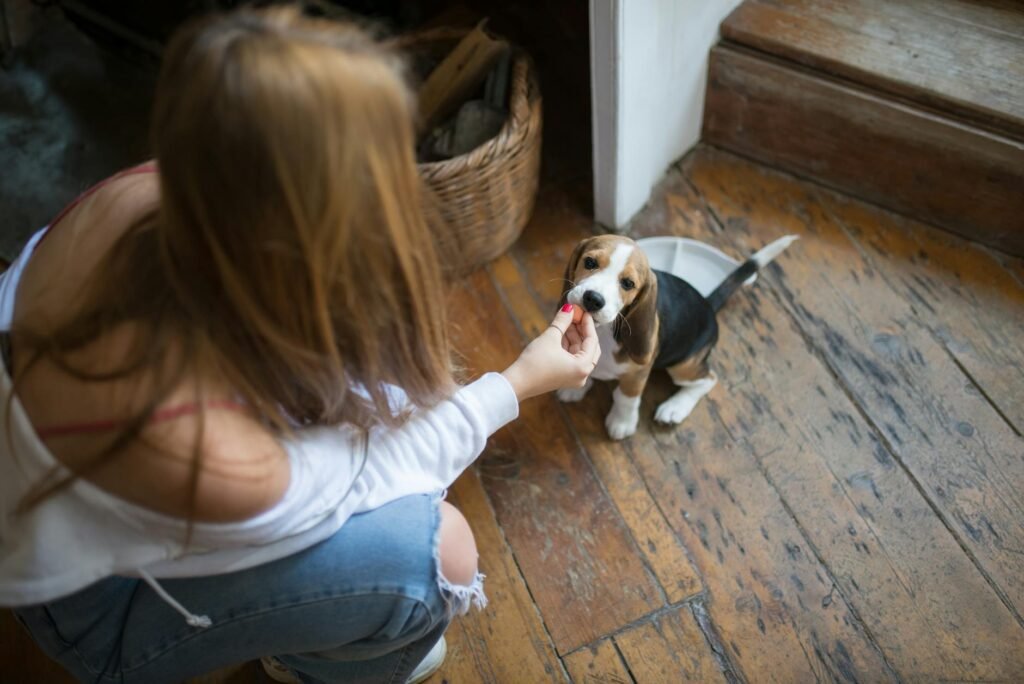
Puppies learn fastest when you teach the right thing at the right age. Push too early and you both get frustrated; wait too long and you miss key windows — especially socialization, which mostly closes by 16 weeks. This is a realistic, stage-by-stage plan from the day your puppy comes home to their first birthday. The golden rule: short, fun, frequent sessions (3–5 minutes, several times a day) beat one long drill.
The Big Picture
| Age | Main focus | Key wins |
|---|---|---|
| 8–10 weeks | Settling in, name, potty routine | Name response, crate is safe, potty schedule |
| 10–12 weeks | Socialization + first cues | Sit, come, handling, new people/sounds |
| 12–16 weeks | Socialization sprint + leash intro | Down, leash basics, bite-inhibition |
| 4–6 months | Proofing + impulse control | Stay, leave it, reliable recall starts |
| 6–12 months | Real-world reliability (adolescence) | Cues hold with distractions, loose-leash walking |
Weeks 8–10: Foundations
Your puppy just left their litter. The job now is trust and routine, not obedience.
- Name + marker: Say the name, and the instant they look, reward. Pair a word (“yes!”) or clicker with every treat so it becomes a “you got it right” signal.
- Potty schedule: Out after every sleep, meal, and play session, plus every 1–2 hours. Reward outside immediately. Expect accidents — they have tiny bladders and zero control yet.
- Crate = safe den: Feed meals in the crate, toss treats in, keep the door open at first. Never use it as punishment.
- Gentle handling: Touch paws, ears, and mouth daily with treats so future nail trims and vet visits aren’t a battle.
Weeks 10–12: Socialization Begins
This is the most important developmental window in your dog’s life. Positive experiences now build a confident adult; gaps here are hard to fix later.
- Expose, don’t overwhelm: New people, surfaces, gentle sounds, car rides, umbrellas, hats, kids at a distance — all paired with treats and kept low-stress.
- First cues: “Sit” (lure with a treat over the nose) and a happy “come” (only ever reward coming — never call them to something they dislike).
- Vaccination caveat: Until the vaccine series is complete, avoid dog parks and unknown dogs. Socialize with vaccinated dogs and clean environments. Puppy classes that require proof of shots are ideal.
Weeks 12–16: The Socialization Sprint
The window narrows around 16 weeks, so this is go-time for safe, varied exposure.
- Keep socializing — aim for new positive experiences most days.
- “Down” by luring a treat from nose to floor.
- Leash introduction: Let them wear a harness indoors, then follow them, then reward for walking near you. No yanking.
- Bite inhibition: Puppy nipping is normal. When teeth touch skin, yelp “ow” and pause play for a few seconds. They learn soft mouths fast.
- Consider a puppy class — structured socialization plus guidance from a pro at the perfect age.
4–6 Months: Impulse Control
Teething and testing limits. Cues exist now; the work is making them stick.
- “Stay” — start with one second, build up slowly.
- “Leave it” — one of the most useful safety cues you’ll ever teach.
- Recall games: Practice “come” in the house and yard with great rewards. A reliable recall can save your dog’s life.
- Chew management: Offer appropriate chews during teething; redirect from furniture rather than just scolding.
6–12 Months: Adolescence (Hang In There)
The “teenage” phase. Your previously perfect puppy may suddenly “forget” everything and test boundaries. This is normal — consistency now pays off for the next decade.
- Proof every cue with distractions: practice in new places, around other dogs, with people watching.
- Loose-leash walking in earnest — reward the position you want, stop moving when they pull.
- Keep socializing so the early work doesn’t fade.
- Don’t panic at regressions. Go back a step, lower the difficulty, rebuild. Patience beats punishment every time.
House-Training Timeline (Quick Reference)
- 8–12 weeks: frequent accidents; you’re managing the schedule, not the dog.
- 3–4 months: fewer accidents, longer holds, but still supervise closely.
- 4–6 months: most puppies are largely reliable indoors.
- 6+ months: occasional slip-ups, usually tied to a missed break or a change in routine.
A rough rule for bladder control: a puppy can hold it about one hour per month of age, plus one — so a 3-month-old maxes out around 4 hours. Don’t expect more.
When to Bring in a Professional
You can teach the basics yourself, but a good trainer is worth it for: a structured puppy class during the socialization window, persistent issues (biting that isn’t fading, fear, reactivity, resource-guarding), or simply faster, cleaner results. Methods matter — look for positive-reinforcement or force-free trainers with real certifications (CPDT-KA, KPA-CTP, or a credentialed behaviorist for serious issues). For the cost breakdown of classes vs. private lessons vs. board-and-train, see our dog training cost guide.
When you’re ready to find one, compare dog trainers near you on Petsomo — filter by city, read real reviews, and check credentials before you book. Free to search, and you contact the trainer directly.
The Bottom Line
Teach the right skill at the right stage, keep sessions short and positive, and treat socialization before 16 weeks as non-negotiable. Do that, and the occasional adolescent backslide won’t shake the foundation — you’ll come out the other side with a confident, well-mannered adult dog.